
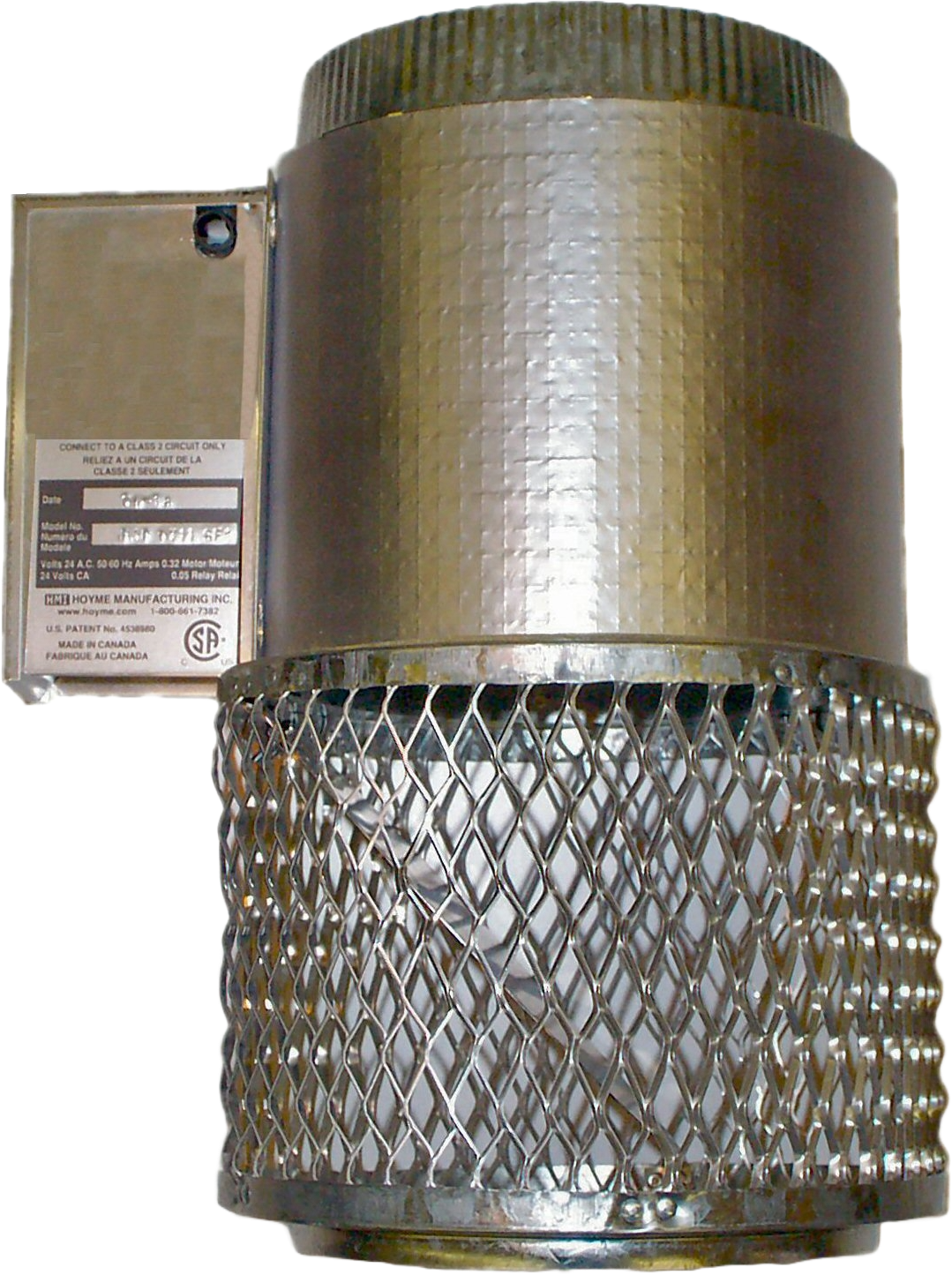
November, no heat call, and there is a combustion air damper in the circuit. In a lot of mechanical rooms that damper is the newest thing in there and the thing the tech has seen least often, so it gets suspected first.
Sometimes it is the damper. More often it is something else in a circuit the damper happens to be part of, and the damper is just the most visible component to point at.
Six checks, maybe ten minutes, mostly in order of how fast they rule something out.
1. Can the Appliance Fire At All
Start here, because it splits the problem in half in about thirty seconds.
Take the interlock out of the circuit and call for heat. If the appliance still will not fire, you are not looking at a damper problem or a control problem. You are looking at an appliance problem and everything downstream of this check is wasted time.
If it fires with the interlock bypassed, now you know the appliance is fine and the fault is somewhere in the proving circuit, which is a much smaller place to look.
On a HOM with a Test/Run switch there is a position that does this for you. On other configurations it is a jumper. The published troubleshooting procedures in the Technical Library give the terminals for each control body, and it is worth having that PDF on the phone before the call rather than during it.
Put it back when you are done. Obvious, and people still forget.
2. Is the Air Path Actually Open
The end switch proves the blade moved. It does not prove anything about the rest of the duct, and in November the rest of the duct is where the problems are.
Go outside and look at the termination. Drifted snow, ice across the opening after a thaw, a screen packed with whatever blew around in October. Then look at the run itself for a crushed flex section or something a different trade put through it.
A blocked intake with a working damper produces a system that behaves strangely rather than one that fails cleanly, which is why it burns so much diagnostic time. Everything in the control circuit tests fine because everything in the control circuit is fine.
Longer version of this in the post on proving position versus proving flow.
3. Transformer Load
This one shows up as intermittent and it is the single most misdiagnosed fault in the category.
Each 24 Vac spring motor damper draws about 6 watts at 0.32 amps. Put three or four of them plus a relay adaptor on a transformer somebody sized for a thermostat and it works fine most of the time. Then a cold morning comes along, everything pulls at once, voltage sags, and something in the circuit does not pick up.
The symptom is a system that fails occasionally and tests perfectly when somebody comes to look at it. Count what is on the circuit and do the arithmetic before you start replacing parts.
4. Which Circuit Is It Wired To
The interlock belongs in the appliance safety circuit. Not the thermostat wire.
Wired to the thermostat, the whole thing appears to work. Call for heat, damper opens, appliance fires. What it is not doing is interlocking, because the safety circuit was never part of the sequence. The appliance can fire with the damper closed and nothing in the system will object.
That is not a no heat fault, it is worse than one. It is an installation that passed a functional check and is not providing the protection it was installed for. Worth looking at any time you have the cover off, whether or not it is the reason you are there.
5. Are the Damper and the Fan Wired in Parallel
Different symptom entirely. This one does not stop anything from running, it just makes the system unpleasant.
Wired in parallel, the fan starts at the same instant the damper starts opening, so it pulls outdoor air through a blade that is still halfway. In January that is a slug of freezing air out the registers at the start of every cycle.
Homeowners describe that as the furnace blowing cold air, which sends people looking at the furnace. The fix is sequencing, not the furnace. The cold air dump post covers it properly.
6. Was the Right Part Ordered
Last on the list because it is the least common, but when it is this, nothing else on the list will find it.
An interlock circuit needs an end switch on the damper. If the damper was ordered without one, there is nothing to send the proved open signal and the sequence cannot complete. The appliance will not fire and no amount of diagnosis will locate a failed component, because nothing failed. The wrong configuration arrived.
Check the part number on the label. If there is an ADP in the circuit and the damper has no end switch, that is your answer and it is a parts problem rather than a service problem.
Same logic on action. A damper that opens when it should close is not broken, it is the other configuration. The part number guide covers reading the label.
Then the Damper
If the appliance fires on bypass, the air path is clear, the transformer is sized right, it is in the safety circuit, and the part number is correct, now it is worth opening the control body.
Published procedures for each control body are in the Technical Library and they work through relay, motor and end switch in a fixed order with specific terminals to jumper. Relay, power supply, motor, in that sequence, because that is the order that rules things out fastest.
Two things worth knowing before you start. A blade that sat closed all summer can stick on residue and come free with soap and water, which is not a component failure. And a broken spring in the motor rotor comes out with long nose pliers and the damper keeps working normally without it, so that is not automatically a motor replacement either.
When it is a component, motor kits, microswitch kits and relay kits are stocked at wholesalers. The drive services in place. A failed part does not mean pulling the damper out of the duct.
Why We Are Telling You This
Because a tech who spends two hours on a damper that was working fine does not come away thinking well of the damper.
Most of the calls that land on our technical line turn out to be one of the six above, and the first one resolves a good share of them inside a minute. If you have worked the list and you are still stuck, call 1-800-661-7382 and somebody who has heard it before will pick up.
Technical Library: troubleshooting procedures and colour wiring diagrams
Related: selecting the right ADP relay adaptor
Hoyme Manufacturing is a CSA certified manufacturer of motorized dampers and airflow controls based in Camrose, Alberta. Products are available through HVAC wholesalers across Canada.