
The call comes in every winter. The ventilation cycle starts and cold air comes out of the supply registers. The furnace is working, the thermostat is set correctly and the filter is clean, but the house feels colder when the ventilation runs.
This is one of the most common fresh air complaints in Canadian residential work. The cause is usually in how the outdoor air reaches the furnace, not in the damper itself. Here is what is happening and what to check.
What Is Actually Happening
On a typical fresh air system, a motorized HAC damper on the fresh air duct and the furnace circulation fan both operate on a ventilation call. The damper opens to let outdoor air into the duct, and the furnace fan distributes it through the house.
If the furnace is not firing during that ventilation call, nothing heats the air on its way through. Whatever mixing happens between the outdoor air and the return air is the only tempering it gets. When the fresh air enters close to the furnace, or the outdoor airflow is large compared with the return airflow, the air leaving the registers can be noticeably cold in January.
Why a Sequencing Delay Is Not the Fix
It is often assumed that the damper and furnace fan starting together is the problem, and that holding the fan until the damper proves open would cure it. That is not how the Hoyme ventilation adaptors work, and it would not address the cause.
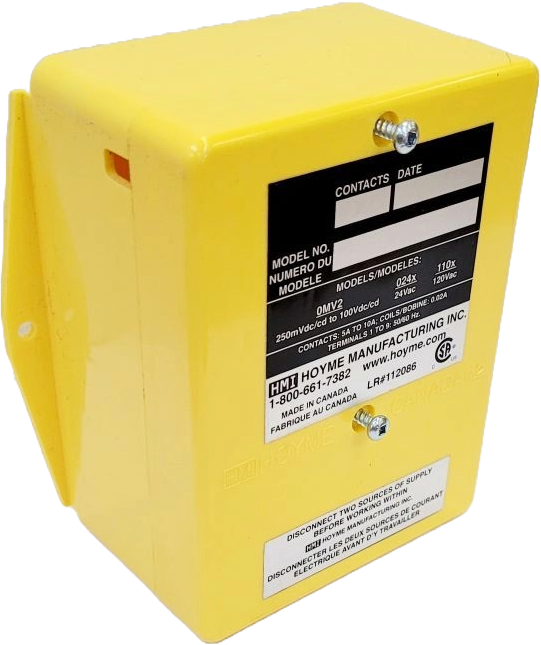
The ADP-0241-05A (24 Vac ventilation switch) and the ADP-1101-05A (120 Vac exhaust fan switch) are designed to open the fresh air damper and start the furnace fan at the same time. That is the intended operation. Holding the fan for a few seconds would not change the temperature of the outdoor air once it is flowing.
What to Check
- Where the fresh air duct joins the return. Outdoor air needs enough distance to mix with return air before it reaches the furnace. Where the code in force sets a minimum mixed-air temperature or a minimum connection distance upstream of the furnace, as Ontario's 2024 code does under 9.32.3.4, check the installation against it. See the OBC 2024 make-up air guide.
- How much outdoor air the system is drawing. Compare the outdoor airflow with the design ventilation rate. An oversized or unbalanced intake delivers more cold air than the return can temper.
- Whether the damper seals between cycles. For a fresh air intake, the HAC should be Power Open (PO), so it springs closed when the ventilation call ends. A Power Close damper, or a damper that is not closing, leaves the duct open every time the furnace fan runs. The part number tells you which you have: HAC-0610-OPO is Power Open.
- Whether the damper should also open on a call for heat. Some designs open the fresh air damper during furnace firing as well, which tempers the outdoor air with heated air. The ADP-0242-05A and the power close damper wiring in the ADP-0241-05A instructions cover that arrangement. It is a design decision, so confirm it with the system designer.
- Condensation on the fresh air duct or damper. Where the damper sits in a cold location, the HAC-L insulated body helps prevent condensation.
Is This a Code Issue or a Comfort Issue?
It depends on the jurisdiction. Ventilation codes set requirements for how outdoor air is supplied, interlocked and tempered, and those requirements differ by province and edition. Confirm what applies with the authority having jurisdiction and the system designer. The adaptor and damper selection follows from that design, not the other way around.
Common Questions
Will this work on an HRV or ERV system? An HRV or ERV tempers incoming air through its core, so this complaint is less common there. The HAC still belongs on the fresh air supply duct to seal it when the unit is off.
Does the A/C circuit get affected by the ADP? No. The ADP relay logic does not affect the air conditioning circuit on any model.
What if an exhaust fan must not run until the replacement air damper is open? That is a different requirement from comfort. The proving adaptors, ADP-1102-TPX, ADP-1103-TPX and RADP-1102-TPX, hold the exhaust fan until the damper end switch proves the damper open. See the ADP selection guide.
What to Order
- HAC Power Open damper sized to the fresh air duct, for example HAC-0610-OPO for a 6" duct.
- ADP-0241-05A for a 24 Vac ventilation switch, or ADP-1101-05A for a 120 Vac exhaust fan switch.
- HAC-L insulated body where condensation is a risk.
Hoyme products are stocked at HVAC wholesalers across Canada. Call 1-800-661-7382 if you need help confirming the right configuration for a specific installation.
View the HAC Inline Air Control Damper
Hoyme Manufacturing is a CSA-certified manufacturer of motorized dampers and airflow controls based in Camrose, Alberta. Products are available through HVAC wholesalers across Canada.